Termite baiting station installation establishes continuous subterranean perimeter coverage around residential footprints. In older crawlspace properties across Haymount and Terry Sanford, high soil moisture combined…
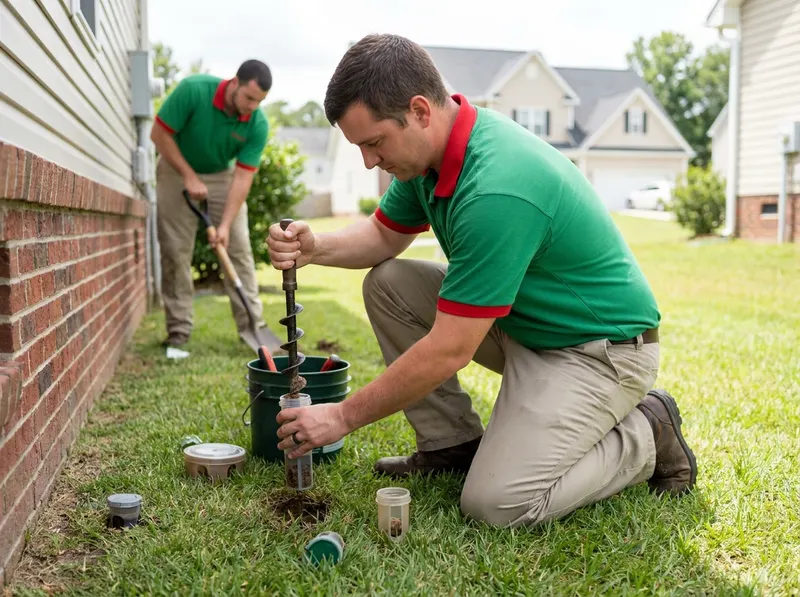
Termite baiting station installation establishes continuous subterranean perimeter coverage around residential footprints. In older crawlspace properties across Haymount and Terry Sanford, high soil moisture combined with historic heart-pine floor joists creates prime feeding corridors for Reticulitermes flavipes. Traditional liquid soil treatments require digging a 6-inch trench and drilling through interior foundation slabs or porches. In contrast, baiting systems install flush into the turf every 10 to 12 feet, 2 to 4 feet away from foundation walls. For homes on expansive clay or properties near the sandy loam transitions around Jack Britt and Arran Hills, stations monitor soil travel paths naturally without pumping hundreds of gallons of termiticide liquid into the ground near sensitive root systems or domestic water lines.
Station placement adapts to structural construction types. Slab foundations common throughout Vanstory Hills and Montclair require stations placed adjacent to expansion joints, utility penetrations, and AC condensate drains where subterranean termites gain unobserved entry. If concrete walkways or patios abut the wall, frequently seen in Buckhead and Kingsford developments, core-drilling 3-inch access holes allows station placement straight through masonry into underlying soil. The active ingredients within the bait matrix, such as noviflumuron or hexaflumuron, disrupt chitin production during molting cycles. Worker termites consume the matrix, bring it back to the central nest via trophallaxis, and collapse the reproductive core of the colony within 60 to 90 days.
Homeowners selecting between baiting arrays and liquid barrier trenching navigate a distinct mechanical trade-off. Liquid termiticides provide an immediate subterranean barrier around the concrete footer, but gaps can emerge if soil shifts, tree roots disrupt the treatment zone, or landscaping beds are dug up later. Bait stations do not kill instantly upon day one; they rely on natural foraging behavior to introduce slow-acting toxicant into the nesting gallery. This strategy avoids the high chemical volume of continuous trenching while tracking colony density through routine checks. For military families stationed around Fort Liberty renting or managing homes in Cottonade and Rayconda, targeted bait stations safeguard structural equity without requiring permanent chemical alterations to crawlspace soils or binding property owners to multi-year contracts.
Every job gets a firm, written price after a free on-site visit.
Tell us about your termite baiting system installation job in Fayetteville and we'll send a clear, written quote, usually the same day.
 Praxeno Pest Solutions