Residential pest control resolves active infestations through systematic source eradication rather than surface-level chemical spraying. In Fayetteville's humid subtropical climate, mature pine canopy and river basins…
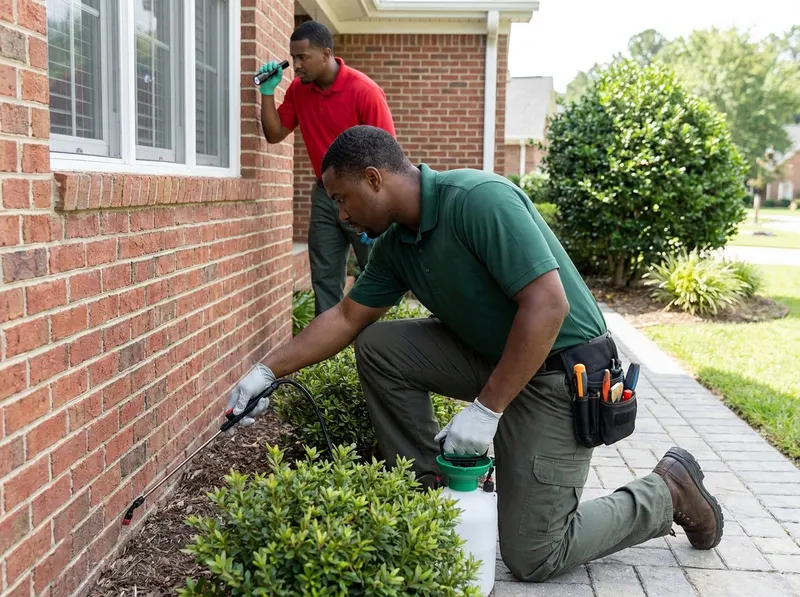
Residential pest control resolves active infestations through systematic source eradication rather than surface-level chemical spraying. In Fayetteville's humid subtropical climate, mature pine canopy and river basins create heavy pressure from crawling insects and rodents seeking climate-controlled shelter. Homes in established neighborhoods like Haymount and Vanstory Hills often feature crawl spaces and stone foundations where moisture collects, providing entry pathways for subterranean termites and wood-boring roaches. Modern slab-on-grade subdivisions near Jack Britt and Buckhead experience perimeter invasions of field mice and Argentine ants along expansion joints and garage thresholds. Targeted residential treatments isolate these mechanical breach points, sealing structural voids and treating exterior harborage areas rather than dispersing airborne chemicals across occupied living rooms.
Treatment selection balances immediate eradication speed with property-specific exposure limits. Mechanical bait matrices and low-volatility microencapsulated suspensions offer targeted mortality against colony Queens while allowing young children and domestic animals to re-enter treated rooms 2 hours after application. When dealing with sudden indoor roach sightings in kitchen cabinets near Terry Sanford or Cottonade, spot baiting eliminates nesting colonies behind baseboards without the odor or surface residue of consumer aerosol foggers. The operational trade-off centers on treatment persistence: botanical dusts and residual micro-barrier applications placed within crawlspace vents maintain structural protection for 90 days, whereas perimeter sprays along sandy Cumberland County soils require reapplication after sustained tropical rain cycles.
Every structural intervention follows an objective 4-step remediation protocol:
1. Foundation and crawlspace inspection: The technician measures perimeter moisture levels, maps plumbing penetrations, and counts active insect harborage zones across the foundation line.
2. Targeted indoor harborage clearance: EPA-registered non-repellent gels and precision dust formulations are injected directly behind plumbing collars, appliance motor housings, and wall voids.
3. Exterior envelope exclusion: The technician seals exterior entry gaps up to 0.5 inches along weep holes, foundation vents, and window thresholds using copper mesh and elastomeric sealant.
4. Perimeter barrier establishment: A continuous 3-foot vertical and 5-foot horizontal liquid boundary layer is established around the exterior apron to halt crawling insect migration from pine straw beds.
Every job gets a firm, written price after a free on-site visit.
Tell us about your residential pest control job in Fayetteville and we'll send a clear, written quote, usually the same day.
 Praxeno Pest Solutions