Bed bug thermal and chemical remediation in Fayetteville resolves active infestations by deploying forced-air convective heat systems to elevate indoor ambient temperatures to 122°F, 135°F for at least 90 minutes. This…
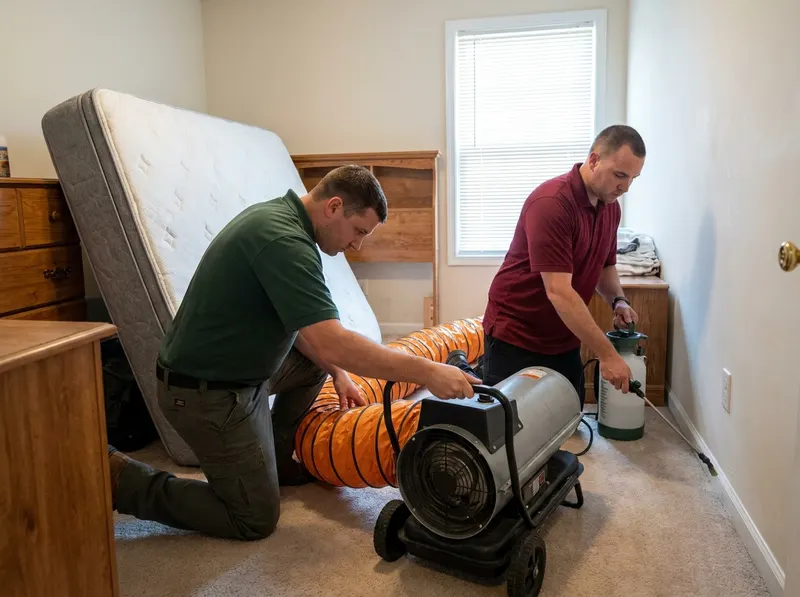
Bed bug thermal and chemical remediation in Fayetteville resolves active infestations by deploying forced-air convective heat systems to elevate indoor ambient temperatures to 122°F, 135°F for at least 90 minutes. This sustained heat penetrates mattress seams, hollow headboards, and wall voids where common consumer pyrethroid sprays fail due to widespread chemical resistance. Thermal treatment denatures the proteins within bed bug eggs and active nymphs instantly. To prevent surviving insects from returning after rooms cool down, technicians place a calibrated microcap non-repellent chemical barrier along baseboards, wall penetrations, and structural perimeters. This dual protocol solves the limitation of stand-alone heat, which offers zero residual protection once equipment leaves the driveway, and stand-alone chemical treatments, which require up to three sequential visits to catch newly hatched nymphs.
The service structure addresses the needs of military households near Fort Liberty and long-time residents in single-family neighborhoods like Vanstory Hills, Haymount, and Jack Britt. Older post-and-beam foundations and historic wood framing in Haymount present extensive perimeter wall voids where heat must be systematically ducted using axial fans. Modern multi-room floor plans in Buckhead, Kingsford, and Cottonade often require multi-circuit 480V thermal generator trailers parked outside rather than residential electrical outlets. Unlike standard monthly pest control plans that spray baseboards on a recurring 12-month contract, targeted remediation focuses exclusively on the immediate infestation footprint, stopping the spread without requiring an ongoing service agreement.
Preparation accuracy determines overall treatment efficacy. Prior to service, occupants must remove heat-sensitive items including aerosol cans, candles, vinyl blinds, oil paintings, and prescription medications from the treatment envelope. Clothes and loose textiles are left inside the treatment zone so heat reaches embedded seams, avoiding the risk of transferring live pests to uncontaminated vehicles or storage lockers. Diagnostic evaluations determine whether a hybrid heat-plus-residual plan or a dedicated targeted chemical protocol fits the building construction, balancing the initial expense of commercial heating equipment against the labor requirements of multiple chemical visits.
Every job gets a firm, written price after a free on-site visit.
Tell us about your bed bug thermal and chemical remediation job in Fayetteville and we'll send a clear, written quote, usually the same day.
 Praxeno Pest Solutions