Securing an effective pest control service Fayetteville homeowners rely on requires eliminating colonies at their biological source rather than applying surface repellents. High humidity along the Cape Fear River basin drives subterranean termites, German cockroaches, and Argentine ants into crawlspaces and wall voids throughout the year.
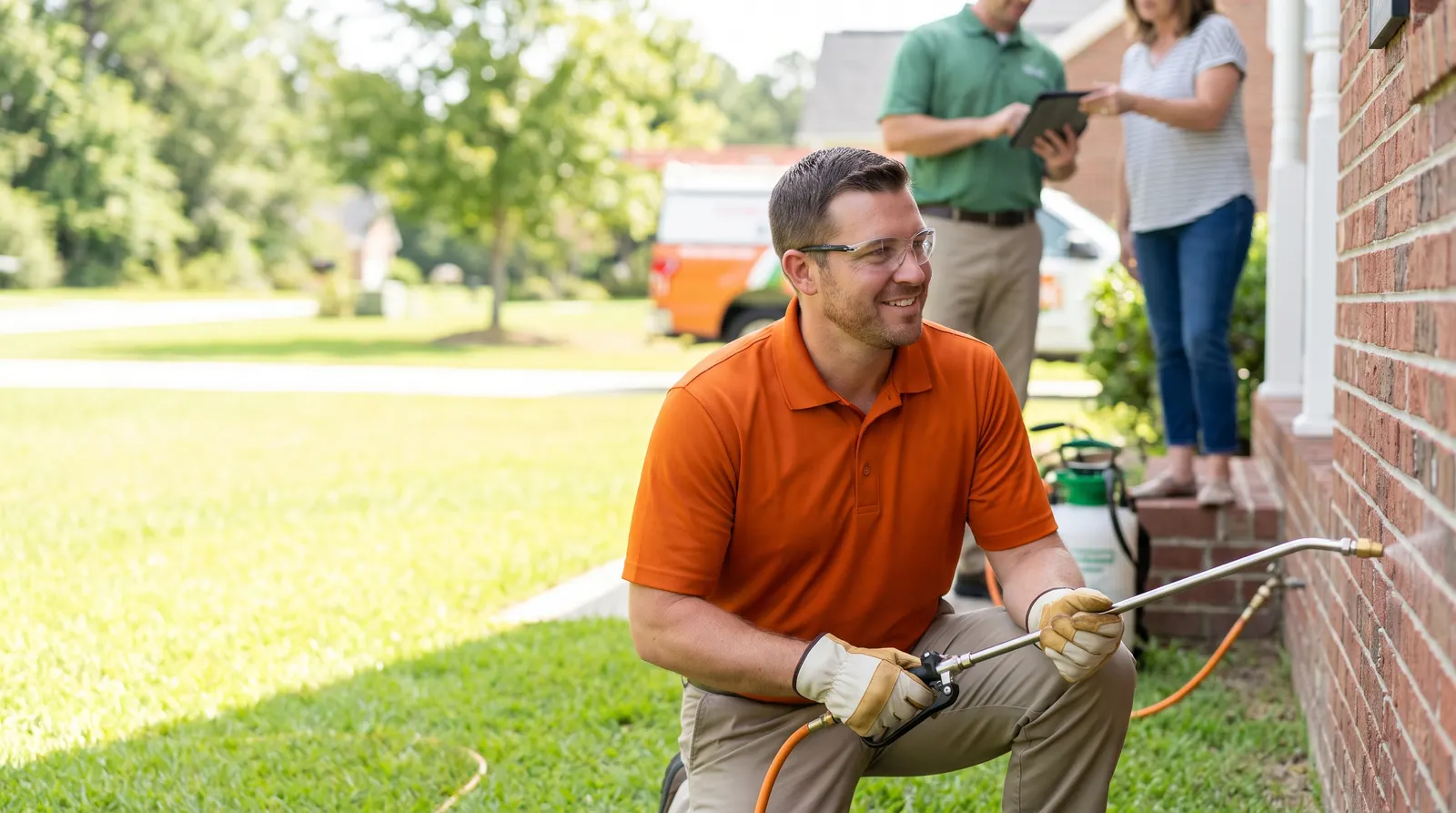
A professional pest control service in Fayetteville is an on-site structural remediation process that identifies nesting vectors, eliminates active insect or rodent colonies, and seals building envelopes across Cumberland County.
Every service reflects the same meticulous attention to detail, whether it's a single job or a larger pest control service project across Fayetteville.
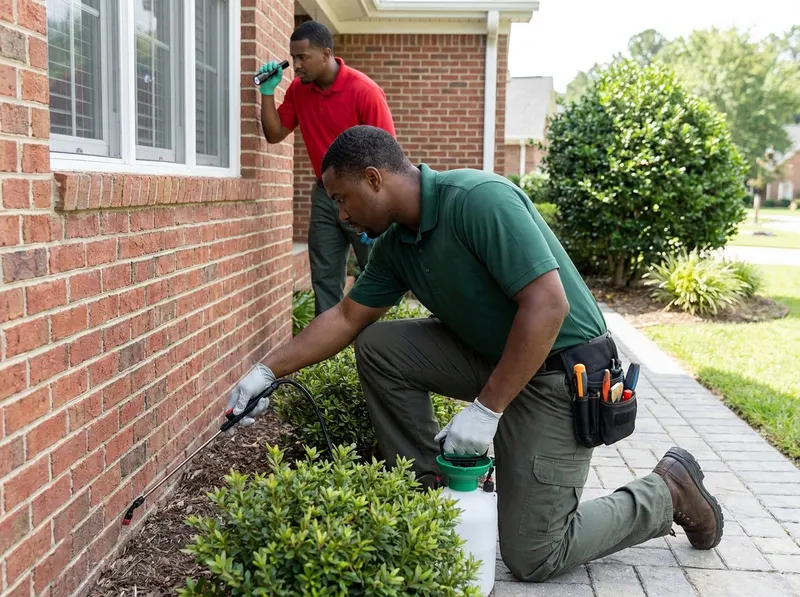
Residential pest control covers comprehensive exterior perimeter treatments, interior micro-barrier applications, and precise crack-and-crevice treatments for single-family residences, townhomes, and duplex properties. Service technicians isolate vulnerable structural thresholds, including subfloor sill plates, expansion joints, basement window wells, and plumbing penetration sleeves through brick veneer. Interventions neutralize common indoor household invaders such as silverfish, earwigs, centipedes, firebrats, and predatory house spiders without dispersing broad-spectrum airborne chemicals across open living spaces. Formulations prioritize low-volatility, micro-encapsulated suspensions that bond securely to brick, cedar, and vinyl exterior claddings, maintaining active perimeter control through ninety days of heavy precipitation and seasonal humidity shifts. Technicians sweep exterior eaves to clear spider webs, inspect crawlspace ventilation blocks for seasonal openings, and advise homeowners on landscape trimming clearances to eliminate natural pest highways leading directly onto roof shingles and fascia boards, completely removing the requirement for binding twelve-month recurring contracts.
Get a quote →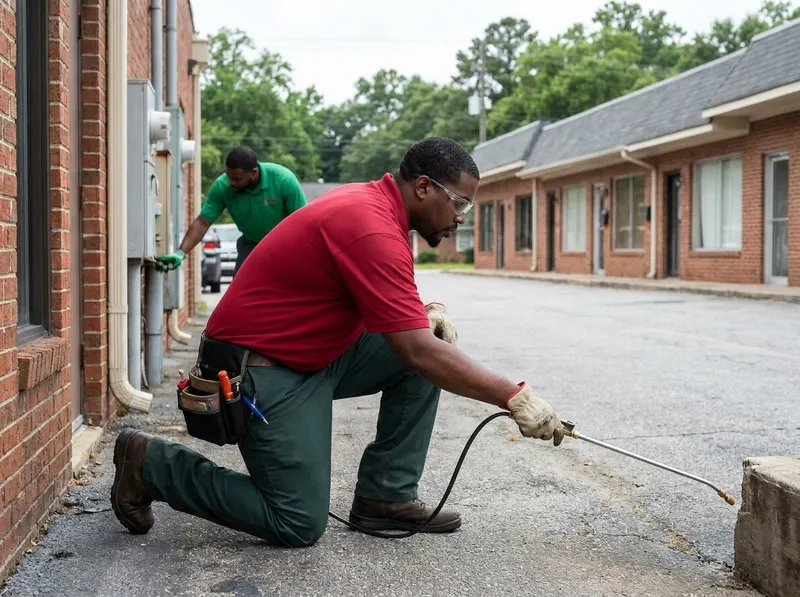
Commercial pest management addresses structural vulnerabilities, sanitary codes, and municipal public health standards for commercial properties across Cumberland County. Targeted facilities encompass full-service food prep environments, commercial warehousing, standalone medical offices, multi-unit residential apartment communities, and logistics distribution hubs. Service programs establish tamper-resistant exterior rodent monitoring stations anchored directly to concrete foundation aprons, high-capacity insect light capture units within loading dock corridors, and non-volatile interior gel baiting systems within back-of-house utility areas. Technicians execute meticulous night or off-hour scheduled applications to eliminate health-code-sensitive invaders, including flies, stored product beetles, and multi-generational German cockroach clusters, without interrupting normal daily customer operations or contaminating clean storage shelves. Full electronic reporting provides timestamped barcode-scanning logs, insect catch counts, and detailed chemical application matrices to satisfy Cumberland County Environmental Health inspectors, standard insurance underwriting criteria, and commercial lease maintenance requirements.
Get a quote →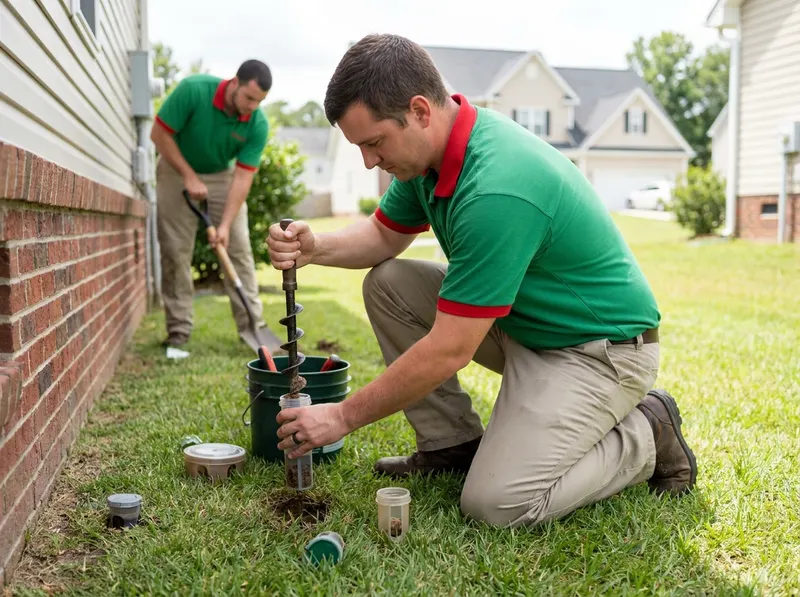
In-ground termite monitoring and bait installations establish an uninterrupted protective subterranean perimeter surrounding residential and light commercial foundations. Technicians use dedicated augers to insert heavy-duty bait cylinders flush into the soil at uniform ten- to twelve-foot intervals around the entire building perimeter, precisely targeting the active subterranean foraging zone. These secure stations house high-density cellulose matrices impregnated with chitin synthesis inhibitors like noviflumuron or hexaflumuron, non-repellent active ingredients that subterranean termites ingest without defensive avoidance. As foraging worker termites feed within the stations, they carry the bait matrix back to the underground central colony via social trophallaxis, disrupting cellular molting throughout all nymph and worker castes. Over an eight- to sixteen-week period, this structural inhibition causes complete biological collapse of the primary subterranean colony, protecting structural pine framing, floor joists, and structural sill plates from devastating structural wood damage without requiring disruptive sub-slab trenching or chemical drilling inside finished living rooms.
Get a quote →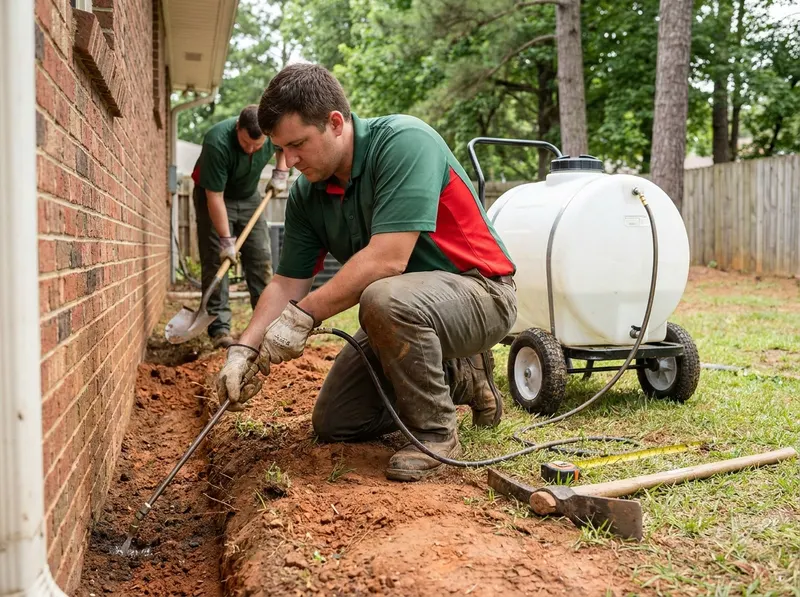
Termite soil trenching creates an impenetrable continuous chemical barrier within the soil immediately adjacent to structural foundation footers, crawlspace piers, and sub-slab expansion joints. Technicians excavate continuous six-inch by six-inch earthen trenches against exterior masonry foundation walls, rodding high-pressure liquid termiticides containing fipronil directly into the backfilled soil at a certified rate of four gallons per ten linear feet per foot of depth. The non-repellent chemistry binds tightly to sand and clay soil particles without leaching, ensuring foraging subterranean termites unknowingly track the lethal termiticide across their subterranean colony networks. In properties built on monolithic concrete slabs, specialized micro-drilling through perimeter expansion joints allows precision pressure injections directly under garage floors and kitchen sub-slabs where hidden plumbing sleeves enter the earth. This comprehensive soil trenching treatment arrests active subterranean mud tube production within ninety-six hours and delivers proven structural foundation wood protection that remains chemically stable for over five years under North Carolina climate conditions.
Get a quote →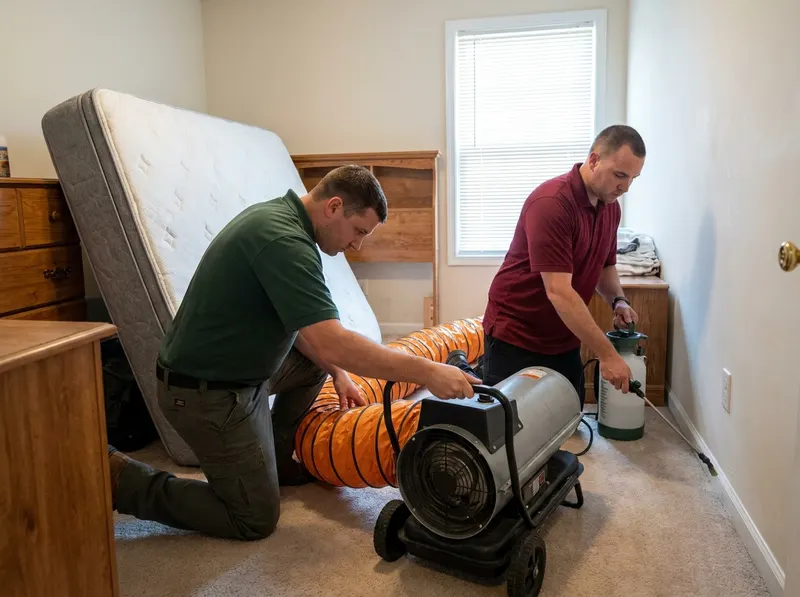
Bed bug eradication programs execute targeted desiccant dust treatments, insect growth regulators (IGRs), and localized high-temperature thermal remediation to eradicate adult bed bugs (Cimex lectularius), developing nymphs, and unhatched eggs. Remediation crews methodically dismantle infected bed frames, headboards, nightstands, and soft seating furniture to identify cryptic harborage clusters hidden within structural screw recesses, tufted fabric folds, and electrical baseboard conduits. Specialized heating systems safely elevate structural room ambient temperatures to a lethal threshold of 122 to 135 degrees Fahrenheit, penetrating deep mattress cores, interior wall cavities, and closet shelving to achieve instantaneous thermal mortality across all biological stages. Where thermal-sensitive electronics or synthetic textiles dictate non-thermal methods, technicians deploy low-mammalian-toxicity amorphous silica desiccant dusts and liquid residual contacts to strip protective epicuticle waxes from active insects, causing rapid desiccation within twenty-four to seventy-two hours while maintaining long-term residual safety throughout living quarters.
Get a quote →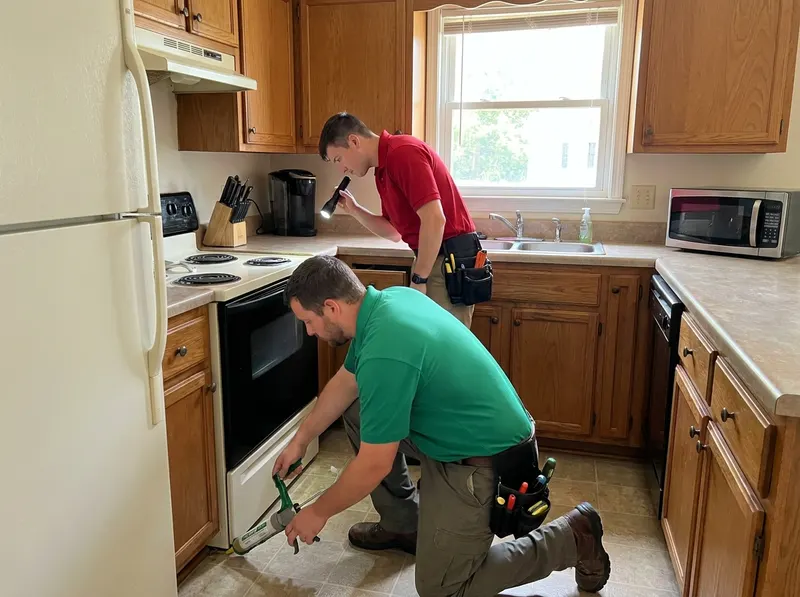
German cockroach clean-out services deploy intensive multi-tier remediation protocols to eradicate dense residential and commercial kitchen infestations. Interventions focus on micro-environments providing warmth and consistent moisture, such as refrigerator compressor housings, under-sink drain loops, dishwasher insulation covers, and microwave control modules. Technicians systematically inject concentrated abamectin, indoxacarb, or fipronil gel micro-beads directly into hidden structural seams, drawer glides, and behind electrical outlet faceplates, eliminating surface contamination risks near food preparation areas. Simultaneously, hydroprene insect growth regulators are applied inside wall cavities to induce adult sterility and prevent developing nymphs from successfully shedding their outer exoskeletons. This targeted biological pressure breaks the reproductive cycle of rapid ootheca production, halting generational replenishment and collapsing entrenched cockroach populations within twenty-one to thirty days without displacing household occupants or requiring full-room aerosol evacuations.
Get a quote →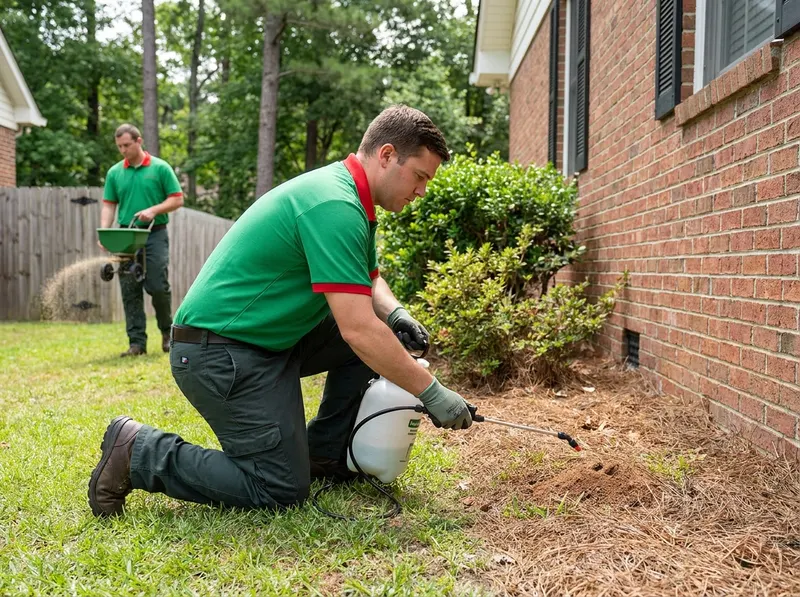
Exterior ant control halts destructive outdoor nesting mounds and persistent foraging trails established by Argentine ants, odorous house ants, acrobat ants, and red imported fire ants (Solenopsis invicta). Field technicians deploy targeted biological granular baits along structural garden beds, brick perimeter borders, and tree bases, matching carbohydrate, protein, and lipid bait bases to the colony's specific seasonal dietary requirements. Foraging field workers actively transport these low-dose non-repellent granular toxicants directly into subterranean central nests, neutralizing reproductive queens and juvenile brood chambers within seven to fourteen business days. To stop continuous foraging trails entering home structures via exterior brick weep holes, window ledges, and vinyl siding starter strips, technicians apply exterior non-repellent perimeter liquid barriers. This chemical envelope remains undetectable to patrolling scout ants, systematically contaminating trailing columns as they attempt to enter kitchen pantries and bathroom water fixtures.
Get a quote →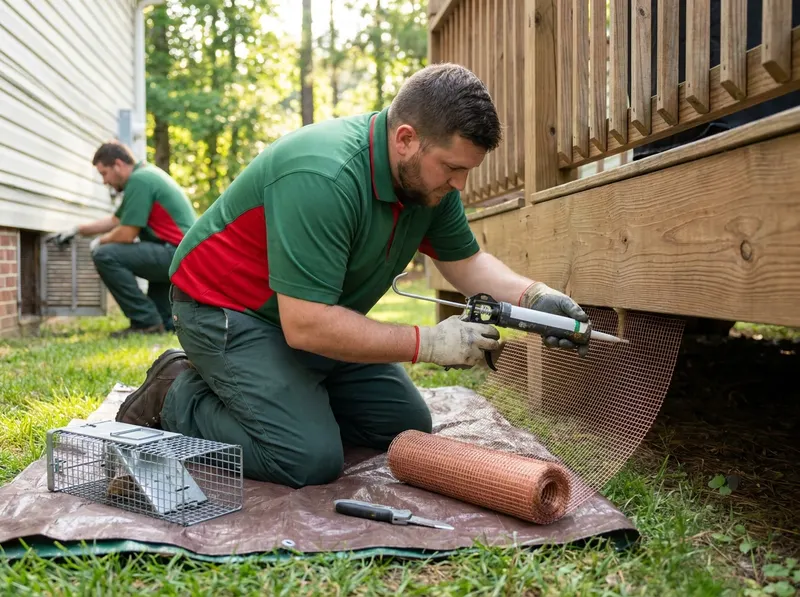
Rodent trapping and structural exclusion provides comprehensive, non-poison remediation for properties experiencing active roof rat, Norway rat, or deer mouse infestations. Service technicians execute exhaustive attic, crawlspace, and roofline inspections to locate primary entry voids, rub marks, structural gnawing paths, and localized droppings. Technicians construct durable physical blockades over all exterior openings larger than one-quarter inch, utilizing heavy twenty-gauge galvanized steel mesh, corrosion-resistant hardware cloth, and metal-reinforced elastomeric sealants over weep holes, soffit transitions, roof returns, and air conditioning copper line-set penetrations. Concurrently, an intensive internal mechanical trapping grid using heavy-gauge snap traps is maintained within enclosed attics and crawlspaces to rapidly capture trapped animals within forty-eight to seventy-two hours. This physical barrier methodology eliminates the structural health hazards of decomposing rodents decaying within inaccessible interior drywall voids, stopping future invasions permanently.
Get a quote →You get a firm, itemized quote for your pest control service before any work begins, no surprises, no pressure.
Careful prep, tidy work, and a full cleanup when we are done. We treat your home and belongings like our own.
The same trusted, background-checked team from the first call to the final check.
Selecting the correct structural treatment depends entirely on identifying pest biology, nesting depth, and structural vulnerability. If dealing with non-wood-destroying, crawling perimeter invaders such as smoky brown roaches, house crickets, ground beetles, or wolf spiders, an exterior liquid barrier application combined with granular botanical dispersal provides immediate perimeter defense. This method creates a contiguous three-foot vertical and five-foot horizontal protective band around the masonry perimeter, stopping active pests as they traverse ground transitions. However, if wood-destroying subterranean termites (Reticulitermes flavipes) or carpenter ants are actively nesting within structural joists, topical sprays provide zero eradication value; property owners must instead deploy an in-ground baiting matrix or a high-pressure sub-slab foundation injection. The critical trade-off between these options involves upfront setup costs versus mechanical longevity and physical chemical footprint. Perimeter liquid barrier sprays degrade under continuous Sandhills ultraviolet exposure and heavy rainfall within sixty to ninety days, necessitating quarterly maintenance. Conversely, low-profile in-ground baiting stations utilize durable chitin synthesis inhibitors that remain active for twelve full months, transferring toxic active ingredients through colony social trophallaxis back to the underground queen without dispersing airborne liquid compounds into sensitive soil or living spaces.
When treating internal living environments, property owners face a clear choice between targeted insect growth regulator (IGR) micro-gel baiting matrices and broad-spectrum aerosol space-spraying treatments. If confronting indoor German cockroach (Blattella germanica) infestations inside kitchen cabinetry or bathroom utility lines, targeted crack-and-crevice gel baiting represents the only clinically sound eradication technique. The microscopic gel deposits remain undetectable to humans, produce zero volatile organic compound (VOC) off-gassing around domestic pets or pediatric respiratory systems, and exploit natural necrophagic cannibalism to collapse second- and third-generation nymphs sequestered deep within wall cavities. In contrast, broadcast aerosol spraying delivers a rapid cosmetic knockdown of exposed adult insects on open surfaces, but it aggressively scatters reproductive female roaches deeper into dry drywall cavities, prompts defensive egg-case (ootheca) dropping, and triggers rapid colony dispersal throughout the residence. For structural rodent infestations involving roof rats (Rattus rattus) or common house mice (Mus musculus), mechanical exclusion and targeted interior snap-trapping represent the responsible alternative to indiscriminate anticoagulant poison baiting. Anticoagulant blocks placed inside attic spaces carry the catastrophic trade-off of rodents dying within inaccessible hollow walls, generating intense decomposition odors and secondary carpet beetle infestations; physical structural sealing using sixteen-gauge steel wire cloth and elastomeric vulcanized caulking stops rodent access permanently at the exterior envelope.
Every project gets a firm, written price after a free on-site visit. Ranges below for orientation.
Tell us about your pest control service job and we'll send a clear, written quote, usually the same day. Or just call and talk to a real Fayetteville pro.
(910) 412-0283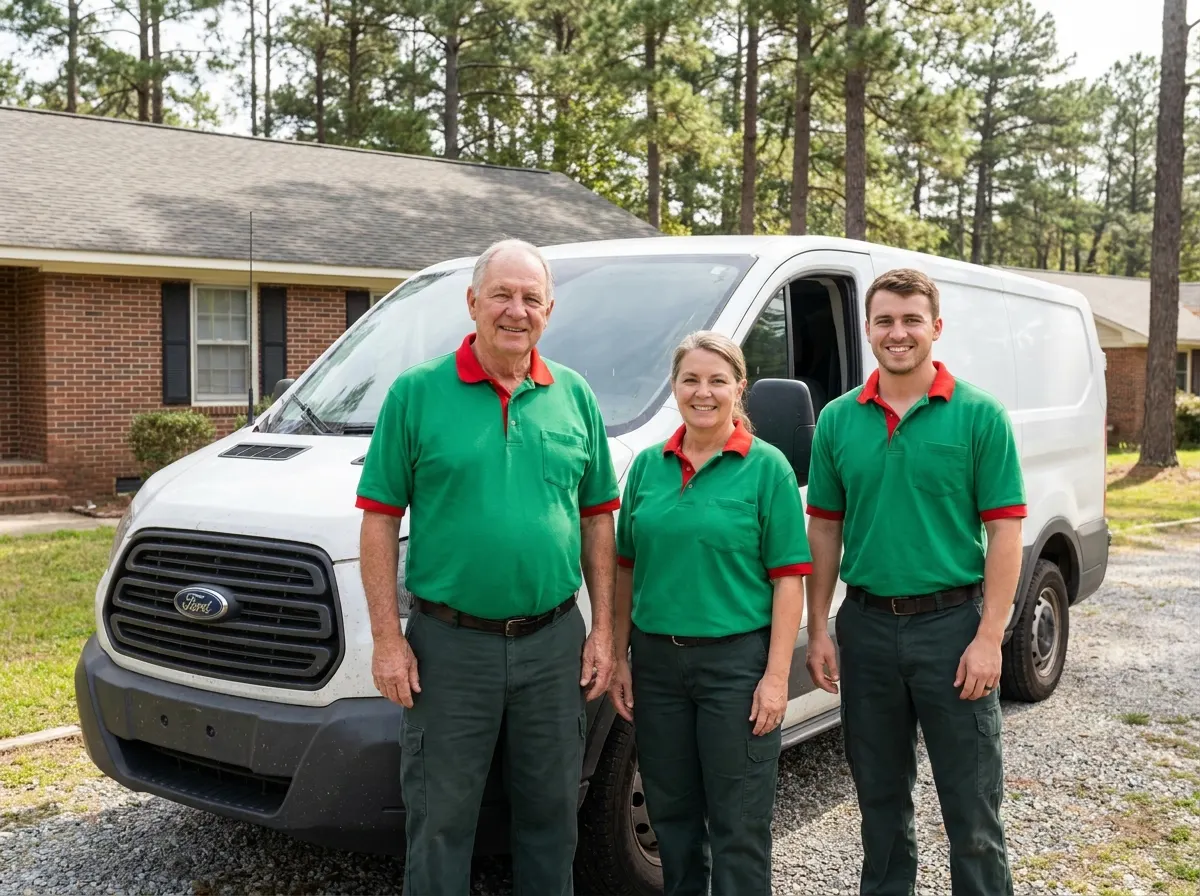
Fayetteville properties face intense biological pest pressure rooted in the geological dynamics of the Carolina Sandhills transition zone and the continuous moisture gradient of the Cape Fear River basin. Dense alluvial soils along Cross Creek, Blounts Creek, and surrounding water features support massive underground populations of subterranean termites (Reticulitermes flavipes), which produce intense swarming events across historic districts like Haymount and Vanstory Hills from early March through late May. In these mature residential sectors, eighty- to one-hundred-year-old pine and hardwood canopies drop substantial leaf mold and pine straw beds immediately adjacent to foundation brickwork, fueling massive colonies of odorous house ants, smoky brown cockroaches, and subterranean camel crickets that seek moisture relief within unvented crawlspaces during dry summer months. Simultaneously, newer suburban tracts in Buckhead, Kingsford, and Jack Britt constructed over cleared agricultural parcels frequently encounter severe field rodent migrations every autumn. As night temperatures consistently drop below fifty degrees Fahrenheit between late October and December, Norway rats and white-footed mice follow HVAC exterior conduits and unsealed masonry weep holes into insulated attics. Furthermore, the immense population turnover surrounding Fort Liberty (formerly Fort Bragg) drives heavy residential leasing activity along major transit corridors such as the All American Freeway, Skibo Road, Bragg Boulevard, and Morganton Road. Fast-cycling tenant relocations create high transmission vectors for domestic hitchhikers, primarily German cockroaches and Cimex lectularius bed bugs, which transfer rapidly between apartment communities and rental homes via used furniture, luggage, and structural plumbing walls. Addressing these specific conditions demands deep local knowledge of Cumberland County architecture, regional soil composition, and seasonal pest biology rather than relying on generic, nationwide treatment schedules.
Free estimates for Fayetteville & the surrounding area.
 Praxeno Pest Solutions